

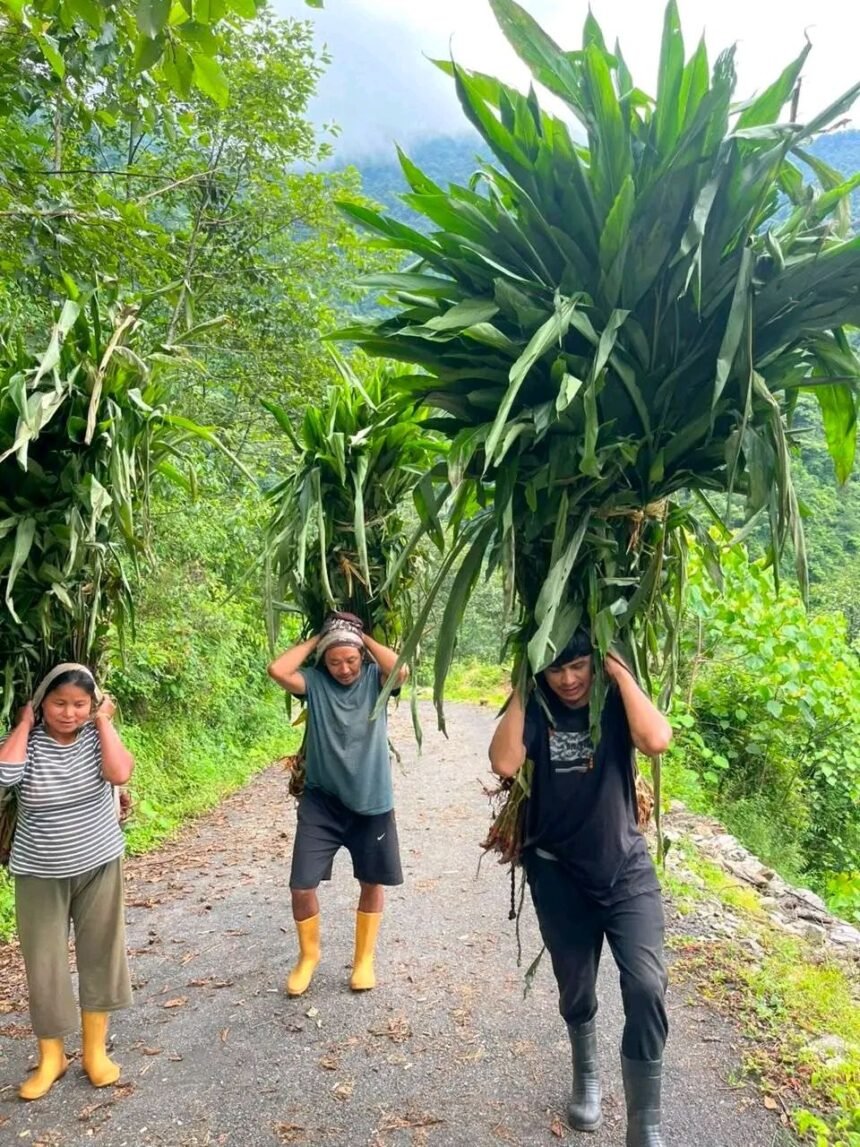
Gangtok, July 30 : The Government of Sikkim, under the visionary leadership of the Chief Minister, has intensified its efforts to revive large cardamom cultivation through the flagship initiative “Mero Alaichi, Mero Dhan.” The initiative aims to restore the State’s premier cash crop, strengthen the rural economy, and enhance the livelihoods of thousands of farming households.
Large cardamom production in Sikkim has witnessed a significant decline over the past two decades due to climate change, the emergence of new fungal diseases, and the continued incidence of viral diseases. The productive lifespan of the crop has consequently reduced from about 20–25 years to merely 3–5 years, severely affecting productivity and farmers’ income.
Recognizing the urgency of the situation, the State Government through the Department of Science and Technology (DST), Government of Sikkim, has launched a comprehensive science- and technology-driven mission integrating biotechnology, disease management, participatory plant breeding, climate-resilient technologies, and farmer-led field demonstrations.
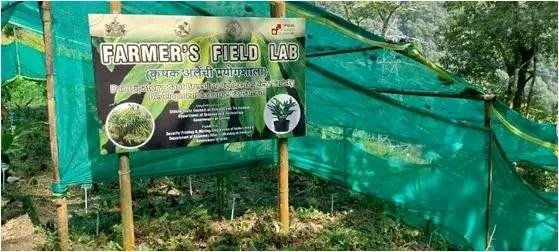
Participatory Plant Breeding: A First-of-its-Kind Initiative
A major innovation under the programme is the introduction of Participatory Plant Breeding (PPB), based on the principle of restoring the crop’s genetic diversity through natural genetic recombination. Scientists believe that continuous vegetative propagation of the same planting material over generations has narrowed the crop’s genetic base, making it increasingly susceptible to diseases and changing climatic conditions.
To facilitate natural evolution, 12 Field Laboratories have been established across diverse agro-climatic zones of Sikkim, comprising 10 farmer field laboratories and 2 institutional field laboratories frequently monitored by scientists and technical personnel of DST. The farmer field laboratories are located at Tarkharka (South Regu), Pasting, Dalapchand, Rorathang, Basilakha, Assam Lingzey, Rumtek, Ranka, Mangshila, and Dzongu, while the two institutional field laboratories have been established at the State Biotechnology Research and Application Centre (Department of Science and Technology Farm), Sajong, and the Nazitam Horticulture Farm.
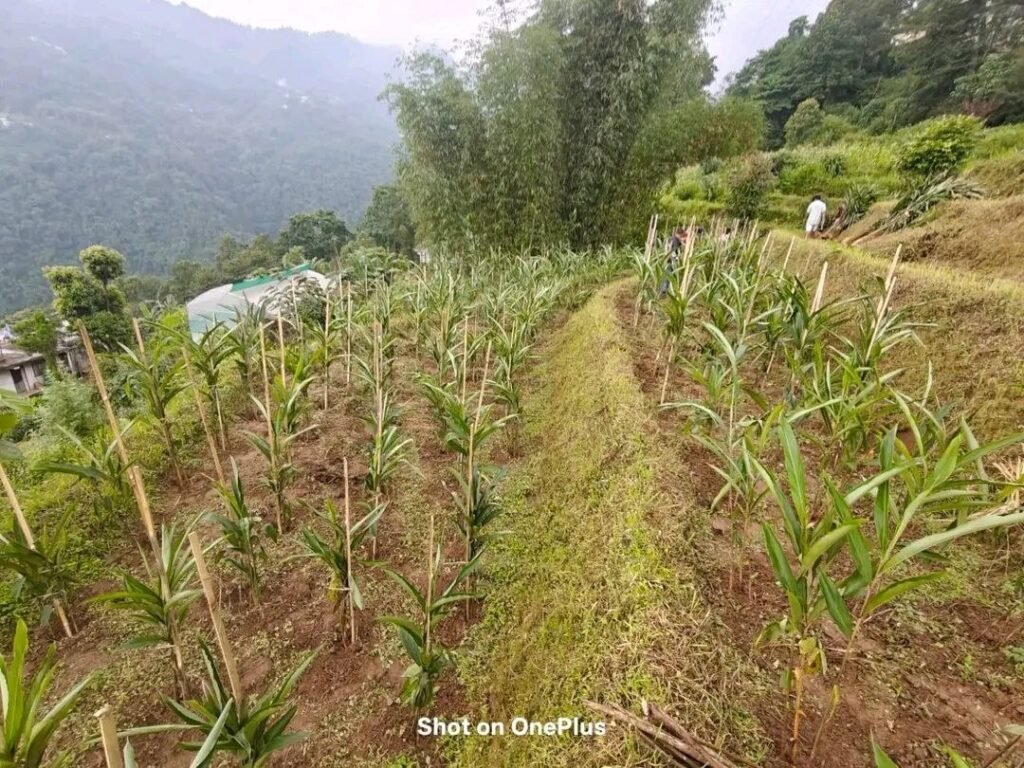
These sites utilize eight diverse large cardamom cultivars—Varlangey, Seremna, Sawney, Dzongu Golsey, Green Golsey, Pakhey, Hario, and Ramsey—to promote natural cross-pollination.
Established in 2025 with financial support from SPMCIL, Government of India, the programme has already produced putative hybrid seeds through natural cross-pollination, many of which have successfully germinated. With more cultivars flowering simultaneously during the current season, scientists expect substantially higher seed set and the emergence of new breeding lines possessing improved yield potential, enhanced disease tolerance, and greater resilience to climate change.
Breakthrough in Disease Management
The Department has also achieved a significant breakthrough in disease management through an innovative application of an organically permitted fungicide at the appropriate time and region. Field studies have demonstrated a three- to four-fold increase in new tiller production compared to untreated plants.
Scientists observed that fungal disease pressure suppresses the emergence of new tillers, leading to premature plant mortality within 3–5 years. By stimulating healthy tiller production, the new technology is expected to substantially enhance plant longevity and plantation productivity. A Package of Practices (PoP) based on this technology has been developed by the Department and was formally released by the Chief Minister during the recent project review meeting at Samman Bhawan. Awareness and capacity-building programmes are currently being conducted across major large cardamom-growing areas to facilitate adoption by farmers.
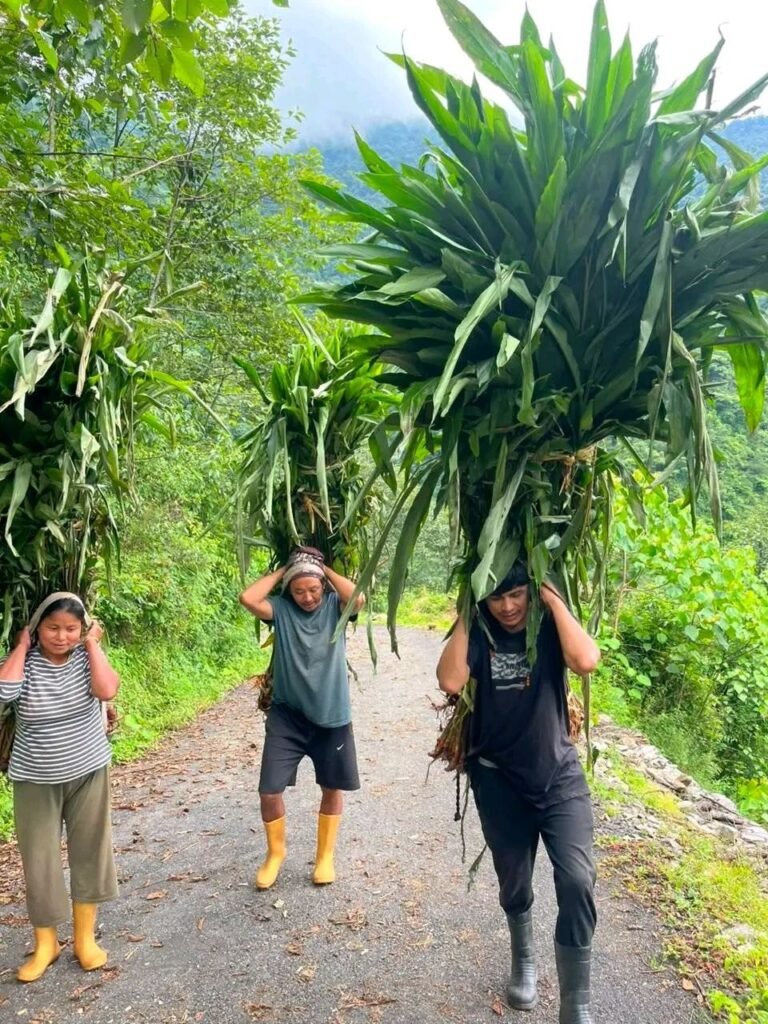
Promotion of Naturally Evolved Disease-Tolerant Cultivars The Department has identified two naturally evolved large cardamom cultivars—Hario and Pakhey—that have demonstrated encouraging tolerance to major fungal diseases and certain viral infections while exhibiting a productive lifespan of more than 15 years.
Following successful evaluation at over 40 locations during 2025, these cultivars are now being promoted on a larger scale under a NABARD-funded project. A total of 17 farmer nurseries have been established for multiplication and expanded field evaluation across suitable agro-climatic zones of the State.
Conservation of Genetic Resources and Collaborative Research
To strengthen long-term research and varietal improvement, the Department has established a germplasm repository containing more than 14 large cardamom cultivars at its 5-acre State Biotechnology Research and Application Centre, Sajong.
In addition, a comprehensive baseline survey covering 21,000 households in major large cardamom-growing regions was jointly conducted by the Department of Science and Technology and the Rural Development Department. The survey findings will serve as the foundation for evidence-based planning and future policy interventions for the sector.
The revival programme is further strengthened through collaborations with premier national institutions, including the International Centre for Genetic Engineering and Biotechnology (ICGEB), National Institute of Plant Genome Research (NIPGR), National Centre for Biological Sciences (NCBS), Institute of Bioresources and Sustainable Development (IBSD), and National Agri-Food Biotechnology Institute (NABI). These institutions are working alongside scientists of the Department to develop advanced biotechnological solutions for disease management, genomics-assisted breeding, speed breeding, molecular diagnostics, and disease-resistant planting materials.
The scientific and technical initiatives are being spearheaded by Dr. K. B. Subba, Scientific Officer, and Dr. Sushen Pradhan, Assistant Scientific Officer, Department of Science and Technology/Sikkim State Council of Science and Technology (SSCS&T), under the guidance and continued support of the Chief Minister, the Principal Secretary, and the Secretary, Department of Science and Technology.
Through these integrated scientific, technological, and farmer-centric interventions, the Government of Sikkim is laying a strong foundation for the revival and long-term sustainability of large cardamom cultivation, ensuring enhanced productivity, climate resilience, and improved livelihoods for farming communities across the State.
