

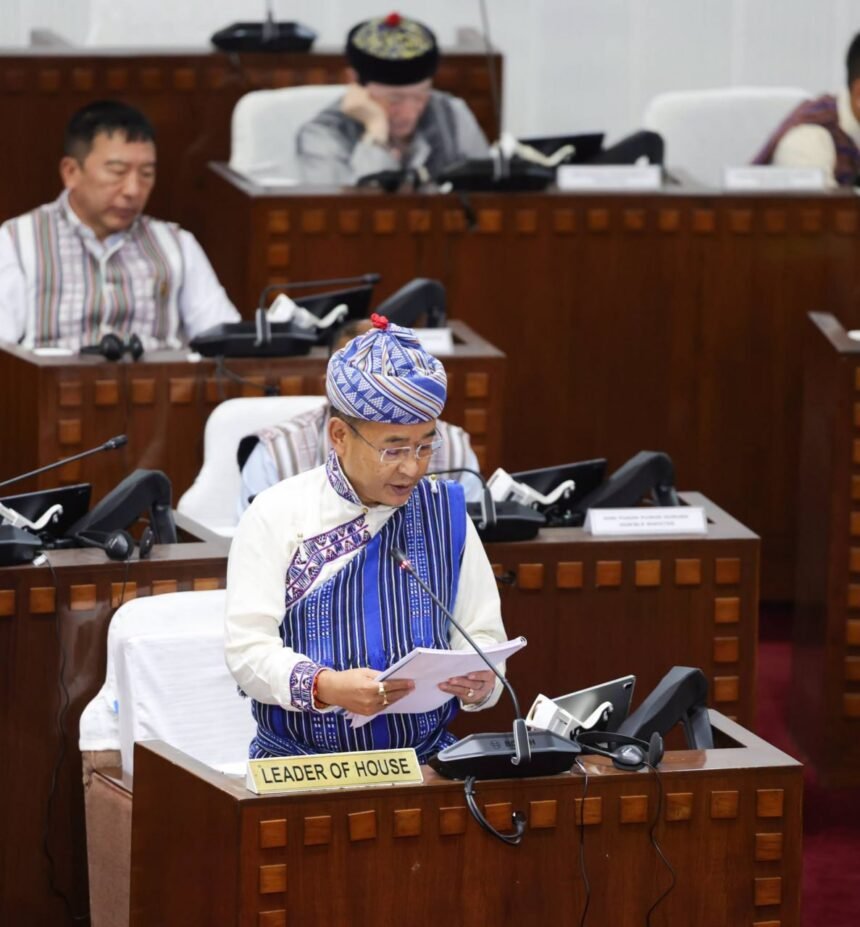
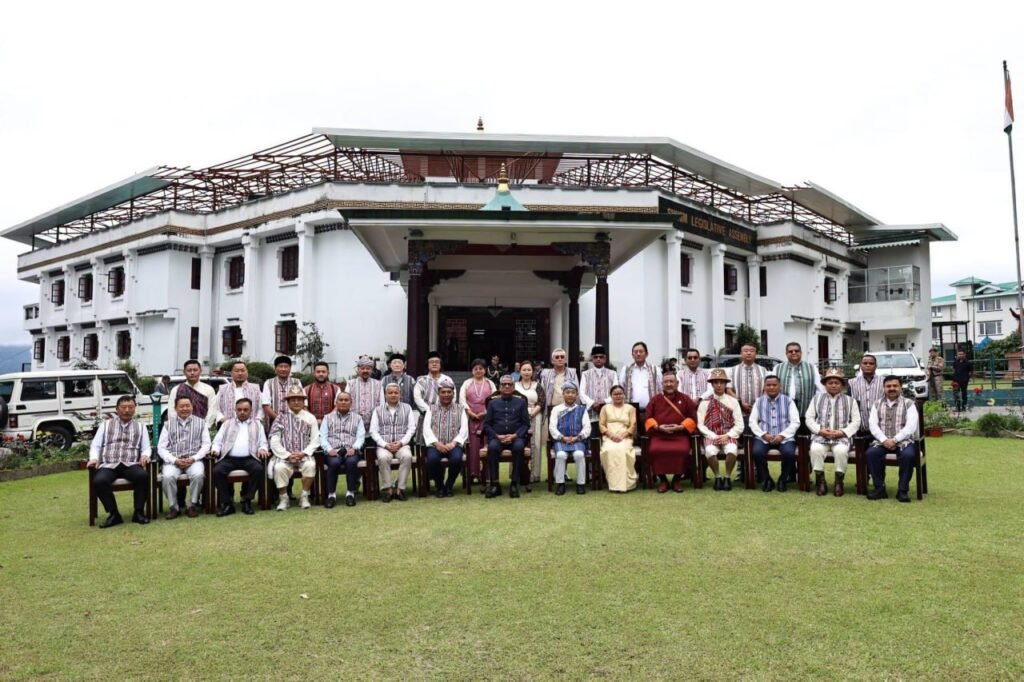
Gangtok, July 20 : The first day of the four-day General Budget 2026-27 of the Eleventh Sikkim Legislative Assembly, presided over by Speaker Mingma Norbu Sherpa, commenced today with the Governor’s address at Sikkim Legislative Assembly.
Governor Om Prakash Mathur outlined the state government’s vision for inclusive and sustainable development in his address.
Describing the 2026–27 Budget as a roadmap for a “Sunaulo, Samriddha ani Samarth Sikkim,” the Governor said the government remains committed to balanced economic growth, environmental conservation, employment generation, women’s empowerment and improved public service delivery.
The Governor congratulated the people of Sikkim on the completion of 50 years of statehood and highlighted the significance of the visits of the President, Prime Minister and Vice President during the Golden Jubilee celebrations.
He noted key milestones, including Sikkim being declared a Fully Literate State, the conferment of the President’s Colour on Sikkim Police, the launch of the Aama Didi Bahini Pink Bus Service and recognition as India’s first Paperless Judiciary. He also congratulated the state government, led by Chief Minister Prem Singh Tamang, for these achievements and for its commitment to the holistic development of Sikkim.
Referring to the Budget placed, the Governor said it would create new opportunities for Sikkim through enhanced investments in tourism, organic agriculture, horticulture, infrastructure and connectivity, while supporting the national vision of Viksit Bharat @2047.
Highlighting the state’s economic progress, he said Sikkim’s Gross State Domestic Product (GSDP) is estimated at Rs 62,973 crore for 2026–27, reflecting significant growth over recent years. He added that capital expenditure is expected to exceed Rs 5,000 crore, underscoring the government’s focus on infrastructure led development.
The Governor identified five strategic priorities: strengthening productive sectors, improving infrastructure and connectivity, investing in human capital, promoting environmentally sustainable growth and ensuring planned urbanisation.
The address highlighted major initiatives undertaken by the government, including the establishment of the Sikkim Government Medical College, state wide HPV screening, a renal transplant programme, climate resilient road infrastructure, women’s empowerment schemes and measures to preserve the State’s cultural heritage.
The Governor also noted a decline in the state’s suicide rate over the past three years, attributing it to sustained mental health and suicide prevention interventions.
He reaffirmed the government’s commitment to strengthening education, healthcare, tourism, entrepreneurship, skill development, environmental conservation and women’s empowerment, while emphasising that development would continue in harmony with nature and Sikkim’s cultural heritage.
Concluding his address, the Governor expressed confidence that the Budget Session would reinforce the state’s commitment towards building a prosperous, resilient and inclusive Sikkim while contributing to the national vision of a developed India by 2047.
Thereafter, Chief Minister, also the Leader of the House, moved the Motion of Thanks on the Governor’s address, seconded by Minister Arun Kumar Upreti.
Discussion on the Governor’s address will be taken up tomorrow i.e., 21st July, 2026.
Chief Minister and Minister-in-Charge of the Finance Department, Prem Singh Tamang, presented the General Budget for the financial year 2026-27 during the financial business of the session.
Presenting the Budget, the Chief Minister proposed a gross expenditure of Rs 19,215 crore for the financial year 2026-27, with a net expenditure of Rs 18,455 crore after accounting for recoveries.
He said the Budget would be financed through the State’s own revenues, transfers from the Government of India and prudent borrowings, with allocations prioritising good governance, infrastructure development and social welfare.
Additionally, revenue expenditure has been estimated at Rs 11,733 crore, while capital expenditure has been pegged at Rs 5,896 crore, excluding loans and advances.
An amount of Rs 2,460 crore has also been earmarked under Centrally Sponsored Schemes to accelerate development across sectors, it is informed.
Presenting the economic profile of the state, the Chief Minister said Sikkim has emerged as one of the most progressive states in the country, recording an average real Gross State Domestic Product (GSDP) growth of over 12.6 per cent during the past eight years.
He said that the state today has the highest per capita GSDP in the country and has witnessed significant improvements in human development, poverty reduction and household income.
Reaffirming the Government’s vision of Viksit Sikkim @2047, he said the state aims to sustain an average annual GSDP growth of over 13 per cent through sound governance, strategic investments and citizen-centric development.
Highlighting the fiscal profile, the Chief Minister informed the House that Sikkim’s GSDP at current prices is projected at Rs 62,973 crore in 2026-27. He said the Government has significantly expanded public investment through enhanced State revenues, prudent fiscal management and mobilisation of additional resources from the Government of India and externally aided projects.
He also acknowledged the contribution of various departments in implementing key reforms that have strengthened governance, improved public financial management and enabled the state to secure additional fiscal support.
The Chief Minister also announced a series of new initiatives across key sectors.
To strengthen the agricultural economy, the government will introduce a State Interest Subvention Scheme under which eligible farmers repaying Kisan Credit Card crop loans on time will be able to avail loans at an effective interest rate of one per cent. He said the initiative would reduce cultivation costs, improve access to institutional credit and benefit small and marginal farmers.
In the health sector, the government announced a statewide Human Papilloma Virus (HPV) screening programme covering around 1.5 lakh women aged 30 to 65 years as part of its efforts to eliminate cervical cancer.
The Chief Minister also announced the operationalisation of Sikkim’s first Renal Transplant Programme at STNM Hospital during the current financial year, enabling patients to undergo kidney transplantation within the state.
He further informed the House that the Sikkim Government Medical College at Sochakgang will commence with an annual intake of 100 MBBS students from the academic year 2026-27 and announced the establishment of an Assisted Reproductive Technology Centre at STNM Hospital to address the state’s declining fertility rate.
To strengthen infrastructure, the government will upgrade around 570 kilometres of roads across the state using Mastic Asphalt Surfacing at an estimated cost of Rs 546 crore. The Chief Minister said the initiative would improve road durability, ensure better all-weather connectivity and reduce maintenance costs.
Reiterating the government’s commitment to women’s empowerment and rural development, the Chief Minister highlighted the Aama Didi Bahini Pink Bus Service and announced the organisation of the SHG Bharosa Sammelan to recognise the contribution of Self-Help Groups towards livelihood generation and community development.
Emphasising the importance of preserving Sikkim’s rich cultural heritage, the Chief Minister said the government would continue supporting the Sikkim Art, Culture and Heritage Development Board, the Sikkim Akademi and the Namgyal Institute of Tibetology.
He also highlighted ongoing efforts to preserve the traditional Lepcha Ru-Soam cane bridge and secure its recognition as an important element of India’s intangible cultural heritage.
The Chief Minister also announced measures to revitalise the state’s large cardamom sector through the flagship Mero Alaichi, Mero Dhan mission, which includes scientific research, disease-resistant varieties and farmer field laboratories.
He further informed the House that the Martam landfill is being transformed into a modern Integrated Waste Management Facility through biomining and scientific waste processing technologies.
Highlighting human capital development, the Chief Minister said the Sikkim INSPIRES programme would benefit more than three lakh women and youth through skill development, entrepreneurship, employment generation and improved access to economic opportunities.
The programme also includes specialised training in tourism, adventure sports and emerging creative industries, overseas employment opportunities for nursing professionals, and expanded mental health and suicide prevention initiatives, the Chief Minister added.
In the power sector, the government will continue implementing the Asian Development Bank-assisted Sikkim Power Sector Development Project and the Revamped Distribution Sector Scheme to modernise electricity infrastructure, improve reliability and strengthen climate resilience.
The Chief Minister informed the House that over 92,000 smart meters have already been installed across the state.
He further announced the implementation of the Sikkim Integrated Urban Development Project, development of satellite townships around Gangtok, revitalisation of the capital’s historic core, and a series of digital governance reforms, including e-Sanction, e-Budget, e-Payment, e-Receipt, e-Voucher and Aadhaar-based Direct Benefit Transfer systems to enhance transparency and efficiency in public financial management.
He welcomed the introduction of the Pride of Hills: Special Development Assistance for Hill States, stating that it would strengthen infrastructure, connectivity, climate-resilient development and public service delivery.
Reaffirming the government’s commitment to fiscal responsibility, he said the state would continue to pursue prudent borrowing and maintain sustainable debt levels while accelerating development and safeguarding the long-term fiscal health of Sikkim.
The Chief Minister further informed the House that the government would continue to vigorously pursue with the Government of India the inclusion of the 12 left-out indigenous communities in the Scheduled Tribes list, reservation of Assembly seats for the Limboo and Tamang communities under Article 371F of the Constitution, the return of His Holiness the 17th Karmapa to Sikkim, and the inclusion of the Bhutia, Lepcha and Limboo languages in the Eighth Schedule of the Constitution.
He said these issues embody the legitimate aspirations of the people of Sikkim and remain central to preserving the State’s unique constitutional identity, cultural heritage and democratic rights.
Describing the General Budget 2026-27 as a roadmap for a stronger, more resilient and prosperous Sikkim, the Chief Minister said it reflects the government’s commitment to fiscal responsibility, inclusive and sustainable development, environmental conservation and the welfare of every citizen, while advancing the vision of a Sunaulo, Samriddha ani Samarth Sikkim.
Thereafter, the Chief Minister placed the Annual Financial Statement, Explanatory
Memorandum to the Annual Budget, Estimates of Receipts, and Demand for Grants for the fiscal year 2026-27 before the House.
During the Legislative Business, the following six Bills were introduced:
1. Minister-in-Charge of Ayush Department Mr GT Dhungel introduced the Sikkim Medical Council for Indian System of Medicine Bill, 2026, (Bill No.04 of 2026) in the House.
The statement of objects and reasons of the Bill states that “The Sikkim Medical Council for Indian System of Medicine Bill, 2026 proposes to provide for the establishment of the State Council for the Indian System of Medicines and to streamline the Indian System of Medicine into Healthcare system of Medicine Act, 2020.
The Indian System of Medicine (ISM), comprising Ayurveda, Yoga and Naturopathy, Unani, Siddha, Sowa Rigpa and Homeopathy, is an integral part of the Indian healthcare system. In the State of Sikkim, there is currently no statutory mechanism to regulate the registration, professional conduct and practice of practitioners of these systems.
Keeping in view the importance and utility of Ayurveda, Yoga and Naturopathy, Unani, Siddha, Sowa Rigpa and Homeopathy, there is an inevitable requirement for establishment of Sikkim Medical Council for Indian System of Medicine in the State.
The Bill provides for the registration of qualified practitioners, grant and renewed registration for regulating professional standards and ethics, and take disciplinary action where required and for recognition and inspection of Institutions, ensure maintenance of standards in education and qualifying examinations, and regulate medical colleges in accordance with the provisions of the National Commission for Indian System of Medicine Act, 2020.
With these objectives in view, the Bill has been framed.”
Discussion on the Bill will be taken up on 21 July 2026.
2. Minister-in-Charge of Education Department, Raju Basnet introduced the Sikkim Private Universities (Establishment and Regulation) (Amendment) Bill, 2026 (Bill No. 05 of 2026) in the House.
The statement of objects and reasons of the Bill states that, “Whereas, the Sikkim Private Universities (Establishment & Regulation) Act, 2025, was enacted during December 2025. This parent/umbrella Act supersedes all individual university Acts and brings uniformity in legislation governing private universities in Sikkim. Therefore, to further strengthen this parent/umbrella Act, some amendments are required.
And whereas, Pushpa Devi Memorial Trust, a trust registered in Rajasthan, proposes to establish a Scholars University of Skills & Innovation at Melli in Namchi District, in Sikkim. The proposed university aims to provide specialised educational programmes for the youth of Sikkim and to contribute to the intellectual, inclusive and sustainable development of the people of Sikkim, through quality teaching, research and extension activities. The Scholars University of Skills & Innovation shall be a self-funded private university and envisages to be a world class higher education institution imparting quality education at par with global principles, and strives to contribute to the inclusive growth of society through pursuit of higher education.
With these objectives in view, the Bill has been framed.”
Discussion on the Bill will be taken up on 22 July 2026.
3. Minister-in-Charge of Education Department, Raju Basnet, introduced the Board of Open Schooling and Skill Education Sikkim (Amendment) Bill, 2026 (Bill No. 06 of 2026) in the House.
The statement of objects and reasons of the Bill states that, “The Board of Open Schooling and Skill Education Act, Sikkim, 2020 (Act No. 14 of 2020) was enacted to provide for the establishment of a Board for the promotion of open schooling and for imparting secondary, senior secondary, vocational and skill education in the State of Sikkim.
In the course of giving effect to the principal Act, it has been felt necessary to amend certain of its provisions so as to bring greater clarity, strengthen the regulatory oversight of the State Government, ensure accountability and transparency in the functioning of the Board, safeguard the integrity of examinations and public certification, and align the provisions of the Act with the National Education Policy and the requirements of recognition by the appropriate authorities.
Accordingly, the present Bill, inter alia, seeks to-
(a) rationalise and update the definitions contained in section 2 and harmonise the nomenclature used throughout the principal Act, including the substitution of references to “Skill Examination” by “Skill Education”;
(b) amend section 3 to provide that the Board shall function as a private, self-financed body corporate subject to the regulatory oversight of the State Government in matters of grievance redressal, academic standards, public interest and compliance with applicable laws; to require the establishment of centres in all districts of the State together with the prescribed minimum infrastructure; to make the commencement of academic programmes, admissions and examinations conditional upon a Permission Certificate issued by the state Government; and to provide for recognition, disclosure and transparency requirements;
(c) ensure that members nominated by the State Government continue to be governed exclusively by the service conditions, orders and instructions issued by the Government of Sikkim from time to time;
(d) strengthen the conduct of meetings of the Board of Management, including the quorum and the mandatory presence of the State Government nominees in matters involving academic policy;
(e) revise the powers and functions of the Board, with emphasis on promotion of open schooling within the State, conduct of examinations in pen-and-paper mode, and development of curriculum and study materials in alignment with the National Education Policy and the National Institute of Open Schooling;
(f) provide for the admission of learners through the Automated Permanent Academic Account Registry (APAAR) identity, while protecting the special benefits, reservations, quotas and scholarships available exclusively to the domiciled residents of Sikkim;
(g) provide for the preparation and timely submission of the Annual Report and the audited annual accounts to the State Government;
(h) insert new provisions relating to the conduct of examinations, the maintenance of records and database, assessment by the State Government, and the liability of the Board and the Sponsoring Body, while excluding the liability of the State Government in respect of the credentials and operations of the Board;
(i) provide for the establishment of an Endowment Fund pledged to the Government of Sikkim to serve as a security deposit for ensuring compliance with the Act; and
(j) make consequential omissions and other changes of a clarificatory and procedural nature.
With these objectives in view, the Bill has been framed.”
Discussion on the Bill will be taken up on 22 July 2026.
4. Minister-in-Charge of Education Department, Raju Basnet, introduced the Board of Open Schooling and Vocational Education, Sikkim Bill, 2026 (Bill No. 07 of 2026) in the House.
The statement of objects and reasons of the Bill states that, “Whereas, the Smile Navya Foundation, Delhi NCR, a Non-Profit organization, registered under Indian Trust Act 1882, having its registered office at Ghaziabad, Uttar Pradesh is engaged in the field of education and intends to establish the Board of Open Schooling and Vocational Education for Secondary and Senior Secondary level in the State of Sikkim. The proposed Private Board aims to enable access to school education at the secondary and senior secondary levels and to increase retention rates among students in Sikkim.
The Private Board also proposes to identify and remove the barriers that prevent children and adult learners from accessing education up to the pre-degree level, including secondary, senior secondary, vocational and skill Education programs, particularly for disadvantaged groups, so as to bring such groups into the mainstream education fold
With these objectives in view, the Bill has been framed.”
Discussion on the Bill will be taken up on 23 July 2026.
5. Chief Minister, also the Minister-in-Charge of Skill Development Department, Prem Singh Tamang, introduced the National Council for Skill Education, Sikkim (Repealing) Bill, 2026, (Bill No. 08 of 2026) in the House.
The statement of objects and reasons of the Bill states that, “Whereas, the National Council for Skill Education, Sikkim Act, 2023 (Act No. 16 of 2023) was enacted for the revival of livelihood competencies of the people, capable to supplement skill gap, life skills, entrepreneurial abilities and enhanced employability in skill education based on secondary, senior secondary and alternative vocational pre-degree education system of the council with the provisions of recognition of prior learning earned through formal, informal or non-formal mode and also to assist in providing any other specialized inputs required for human resource development with special emphasis on rural and backward areas under the management and sponsorship of National Council for Skill Education;
And whereas, the Act has been reviewed duly taking cognizance of the observation of Education Department on potential administrative overlaps and conflicts between the provisions of the Act and the business allocated to the Education Department under the Government of Sikkim (Allocation of Business) Rules, 2019;
And whereas, the Act envisages functions that subsequently overlap with the National Regulatory Body such as National Council of Vocational and Educational Training (NCVET) an apex regulatory body under the Ministry of Skill Development and Entrepreneurship, Government of India to strengthen skilling ecosystem in the country and also the domains of UGC and the established educational regulators. Therefore, inherent contradictions and inconsistencies within the Act may give rise to severe legal and administrative complications:
And Whereas, the Secretary, National Council for Skill Education, has been advised not to commence the activities of the Council without Letter of Authorization (LOA) from the State Government to maintain uniformity in the procedures in functioning of the private educational and training institute in the State vide letter No. GOS/SDD/515 dated the 14″ day of November 2025;
Now therefore, to align Sikkim’s skilling initiatives with a broader vision of Viksit Bharat, the State Government has deemed it expedient to repeal the National Council for Skill Education, Sikkim Act, 2023 (Act No. 16 of 2023).
With these objectives in view, the Bill has been framed.”
Discussion on the Bill will be taken up on 21 July 2026.
6. Chief Minister, also the Minister-in- Charge of Home Department, Mr Prem Singh Tamang, introduced the Sikkim Fire and Emergency Services (Amendment) Bill, 2026, (Bill No. 10 of 2026) in the House.
The statement of objects and reasons of the Bill states that, “The Sikkim Fire and Emergency Services Act, 2023 is proposed to be amended in pursuance of the Government of India’s policy on Ease of Doing Business and decriminalization of minor regulatory offences, with a view to rationalize the regulatory framework.
The proposed amendments seeks to remove provisions relating to imprisonment, simplify compliance requirements, omit references to the National Building Code, and provide clearer definitions of certain terms, thereby facilitating ease of compliance while ensuring effective enforcement of fire safety standards.
With these objectives in view, the Bill has been framed.”
Discussion on the Bill will be taken up on 22 July 2026.
