

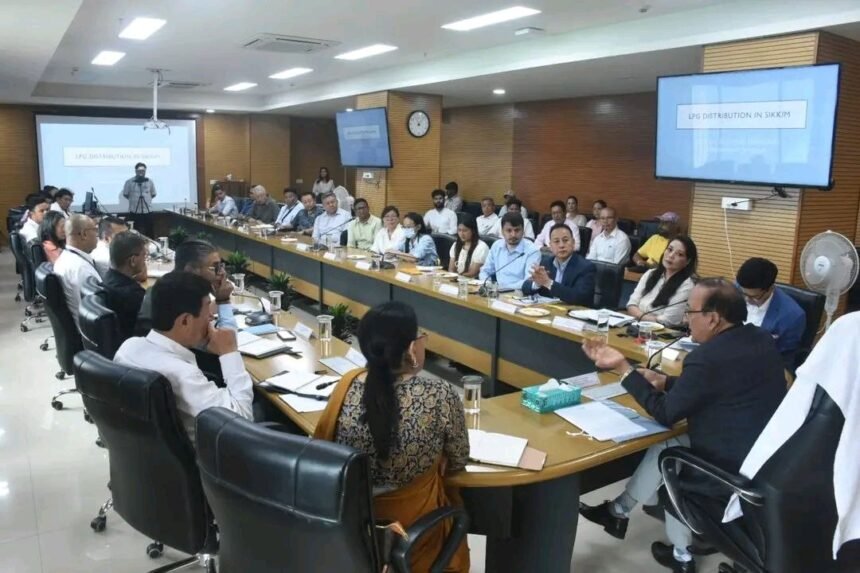
Gangtok, July 27 : Vice Chairman, Institute for Transforming Sikkim (ITS), C P Sharma, chaired a coordination meeting with the Food and Civil Supplies Department and LPG distributors at Tashiling Secretariat today to review the distribution of Liquefied Petroleum Gas (LPG) and petroleum products across the state.
Joint Controller, Legal Metrology Unit, Food and Civil Supplies Department, Jikmi Kazi, presented an overview of LPG distribution in Sikkim. He informed the meeting about the existing LPG consumer network, distribution arrangements, and supply mechanisms in place across the state.
Sikkim has a network of public and Army LPG distributors serving consumers across different regions. LPG supplies are sourced from IOCL bottling plants at Bageykhola, Sikkim, and Raninagar, West Bengal, while BPCL and HPCL receive supplies from their respective bottling facilities in West Bengal.
Presenting the district-wise distribution network, Jikmi Kazi informed the meeting that LPG distributors are operating across all districts to cater to consumers throughout the state.
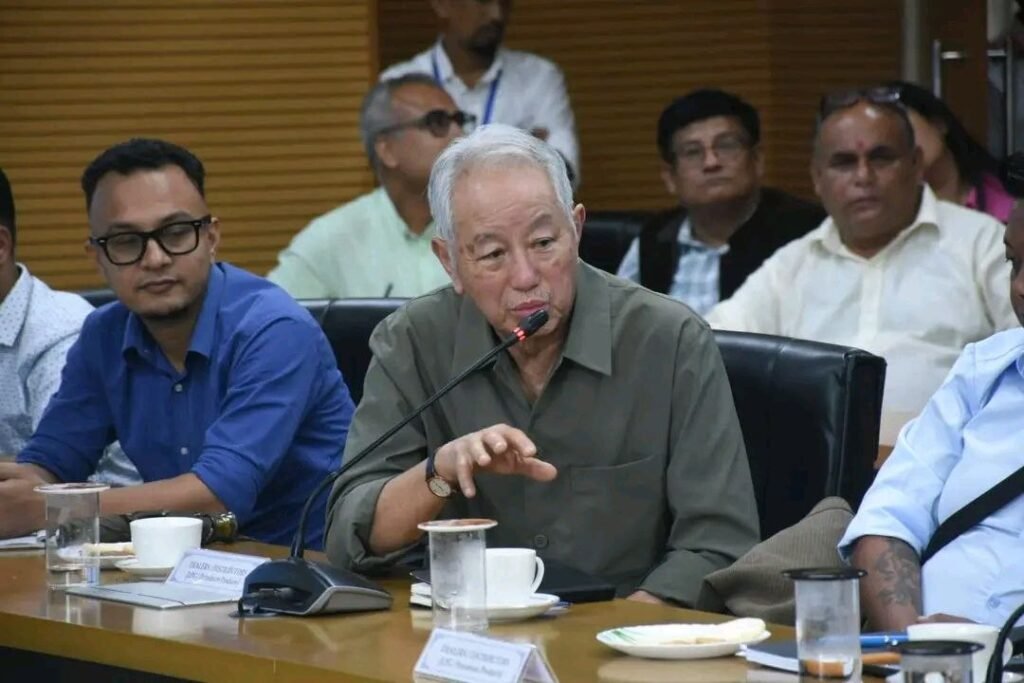
He highlighted the role of the IOCL bottling plant at Bageykhola in supporting LPG supply operations. LPG is transported in bulk tankers to the bottling plant before being supplied to distributor godowns and subsequently delivered to consumers. The booking cycle varies depending on whether consumers are located in urban or rural areas.
Jikmi Kazi also explained the Delivery Authentication Code (DAC) system, which ensures transparency and prevents unauthorised deliveries. He informed that extensive efforts have been undertaken to link consumer details with mobile numbers and streamline delivery mechanisms. The department has also notified LPG delivery points and schedules for distributors.
On transportation charges, he stated that no charges are applicable within the prescribed distance from a distributor’s godown. Charges beyond the notified distance vary according to location and are regulated by the department.
He outlined the measures adopted by the State Government to address LPG supply challenges during periods of disruption. These include regular coordination meetings with distributors, facilitating the movement of LPG vehicles, continuous monitoring of LPG and petroleum stocks, inspections of distribution agencies, submission of Action Taken Reports to the Ministry of Petroleum and Natural Gas, and the establishment of State and District Control Rooms to ensure equitable distribution.
The Government has also coordinated with HPCL on a pilot Piped Natural Gas (PNG) project, supported alternative fuel initiatives, worked towards securing additional LPG allocations, and conducted consumer awareness programmes on digital LPG booking across districts.
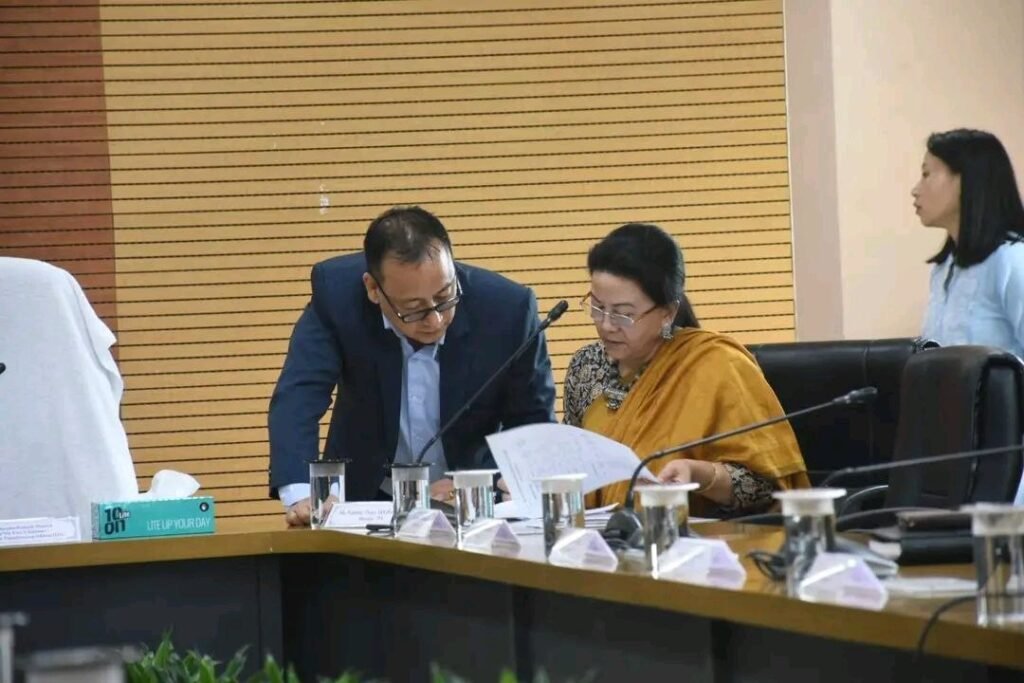
Regarding petroleum products, Jikmi Kazi informed that retail outlets across the state continue to operate with supplies sourced from depots and terminals in Sikkim and West Bengal. He also highlighted the existing storage infrastructure supporting petroleum product availability.
Presenting the roadmap for Viksit Sikkim 2047, Jikmi Kazi highlighted plans to appoint new LPG distributors in underserved areas, enhance LPG infrastructure, introduce PNG as an alternative cooking fuel, and implement a pilot CNG station project. He also pointed out key challenges, including storage limitations, delays in expanding distribution networks, and difficulties in acquiring land for City Gas Distribution (CGD) infrastructure. ITS assured all possible support in pursuing these issues with the concerned stakeholders.
Member, ITS, Namrata Thapa, reviewed the LPG supply chain, infrastructure, consumer services, crisis preparedness, technology, governance and institutional coordination.
She also discussed consumer grievances and emergency response mechanisms while recommending district-level LPG contingency plans, the creation of buffer stocks before the monsoon season, and the expansion of rural LPG distribution and last-mile delivery services.
Member, ITS, Dr Bharat Chandra Basista, suggested displaying LPG rates for public awareness, ensuring safety approvals in accordance with PESO guidelines, and strengthening measures to curb grey market activities in line with the LPG Marketing Guidelines.
Member, ITS, Dr Neeraj Adhikari, recommended ensuring adequate LPG refills for students and installing display boards at petrol pumps to improve public awareness while generating advertising revenue.
The meeting was also attended by Secretary, Planning and Development Department, Tushar Nikhare, Secretary, Food and Civil Supplies Department, Norzing Tsering, Members, ITS, Dr Sangay Dorjee Bhutia,James Saring Lepcha and Dr Shiva Kumar Sharma, officials of the Food and Civil Supplies Department, LPG distributors and other stakeholders.
