

KANCHAN DAHAL
Evolution of West Sikkim and the Emergence of Soreng District
The concept of a modern administrative district in Sikkim is relatively recent and took shape during the early 1960s as part of administrative reforms initiated under the Chogyal’s rule. Prior to 1963, Sikkim was broadly divided into zones, and governance was carried out through traditional authorities such as the Zonepal and Yaplas, who exercised local administrative control.
Formation of West District (1963)
A significant milestone in Sikkim’s administrative history occurred in 1963, when the East Zone was bifurcated from the combined East and North District. Simultaneously, the West Zone, which earlier fell under the West and South Districts, was reorganized. As a result, the West District came into existence as a modern administrative district on 1st April 1963, through a royal order issued by the King of Sikkim.
Mr. P. K. Pradhan was appointed as the first District Officer of West District. The District Officer was vested with extensive administrative powers on behalf of the King, although the traditional authority of Zonepal and Yaplas continued to function alongside the new system during this transitional phase.
Institutional shift from District Collector to District Magistrate
In 1972, the designation “District Collector” was officially used for the first time in Sikkim. Mr. P. K. Pradhan is widely regarded as the first District Collector of West District, marking another important step in aligning Sikkim’s administrative structure with modern governance practices.
Following the merger of Sikkim with India in 1975, the post of District Collector was redesignated as District Magistrate, and the office was conferred with judicial and executive powers under the Criminal Procedure Code of 1898. This change further strengthened district-level administration and law enforcement.
Creation of Soreng District (2021)
A major administrative reorganization took place decades later. As per the Sikkim Government Gazette Notification No. 50/LR&DMD/ACQ/GOS dated 20 December 2021, the erstwhile West Sikkim District was bifurcated into two separate districts namely:
1.Gyalshing District
2.Soreng District
With this notification, Soreng District formally came into existence, marking a new chapter in the administrative and developmental history of the region.
Emerging Tourism Potential of Soreng District
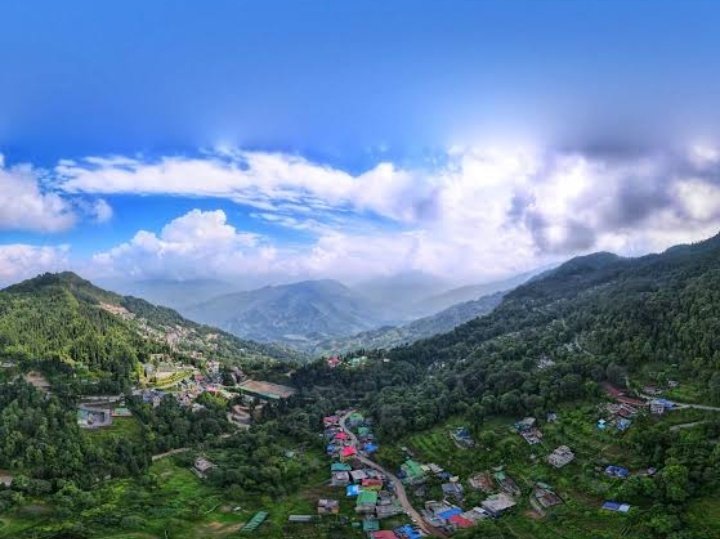
The creation of Soreng District has opened new opportunities for focused regional development, particularly in the field of tourism. Blessed with pristine natural beauty, Soreng is characterized by rolling hills, dense forests, terraced farmlands, and panoramic views of the Himalayan ranges. Its moderate climate, rich biodiversity, and traditional rural lifestyle make it an ideal destination for eco-tourism, rural tourism, and cultural tourism.
Key Tourist Attractions and Emerging Destinations of Soreng District
With the creation of Soreng District, the region has gained renewed administrative focus, paving the way for sustainable tourism development. Blessed with diverse landscapes ranging from dense forests to sweeping Himalayan vistas, Soreng District offers a unique blend of natural beauty, spiritual heritage, and rural charm. Some of the most prominent and emerging tourist destinations are highlighted below.
Barsey Rhododendron Sanctuary
The Barsey Rhododendron Sanctuary in West Sikkim is a biodiverse haven on the Singalila Range, famous for its stunning rhododendron blooms (April-May), diverse orchids, and rich birdlife, offering easy treks from entry points like Hilley, Dentam, and Soreng, with breathtaking views of Mt. Kanchenjunga during clear seasons (Nov-May). Barsey Rhododendron Sanctuary is internationally renowned for its vibrant rhododendron forests. During the spring season, the sanctuary transforms into a spectacular landscape of blooming red, pink, and white flowers. Apart from its floral richness, Barsey offers serene trekking routes, rich biodiversity, and breathtaking views of the Kanchenjunga mountain range, making it a paradise for nature lovers and trekkers.
Chakung – Gateway to Himalayan Views
Chakung is an important vantage point in Soreng District, well known for its panoramic views of the snow-clad Himalayan peaks. The location provides an excellent opportunity for tourists and photographers to witness majestic mountain landscapes, particularly during early mornings and clear weather. Chakung also serves as a connecting point to several interior villages, offering insights into the traditional rural life of West Sikkim.
Chakung Viewpoint : A major attraction offering sunrise and sunset views over the Himalayan peaks and the surrounding Teesta River valley.
Chakung Monastery: Originally built in 1874 and reconstructed in 2009, this monastery belongs to the Nyingmapa sect.
Adventure Activities: In December 2025, the youths of Chakung village hosted “Go Chakung,” an adventure event featuring mountain biking, trail running, bouldering, and paragliding.
Offbeat Stays: The area is popular for its bamboo-themed homestays and camping sites, such as The Camp Chakung, which focus on sustainable tourism and local organic food.
Daramdin – Cultural and agricultural Hub
Daramdin is emerging as a significant destination due to its strategic location and natural surroundings. Surrounded by lush greenery and agricultural fields, Daramdin reflects the cultural vibrancy and traditional lifestyle of the local communities. Attractions in and around Daramdin
Daramdin Sai Temple: beautiful temple is a significant pilgrimage site in the region, featuring a large compound decorated with diverse Himalayan flowers and plants. It maintains a peaceful ambiance and is the first of its kind in the Northeast region.
Jureli Dara: A recently developed tourist hub offering panoramic views of the Daramdin valley and adjoining mountain ranges. It is an ideal spot to relax and appreciate nature’s beauty.
Batesay Dara: A public hub where visitors can explore the natural beauty of the area, including views of the mountains and the Rambang river.
Stairway to Heaven:
The project is a reconstruction of the legendary Stairway to Heaven built by the ancestors of the Lepcha community. According to Lepcha folklore, ancestors attempted to build a massive tower of ceramic blocks to reach the sky.
The Tower’s Fall: When builders near the top requested a “hook” to pull the sky down, workers on the ground misunderstood the request and began destroying the foundation. The tower collapsed, and the survivors scattered, eventually speaking different languages a story often compared to the Tower of Babel. Numerous ancient ceramic pieces have been discovered in the Daramdin area, lending a historical basis to the local legend.
Brindavan Dham, Dodok – A Spiritual Landmark (Upcoming)
One of the most anticipated tourism projects in Soreng District is the Brindavan Dham at Dodok, which is currently on the verge of completion. Envisioned as a major spiritual and pilgrimage destination, BrindavanDham is expected to attract devotees and tourists from within and outside the state. Once completed, it will not only enhance religious tourism but also contribute significantly to the local economy by generating employment and allied tourism activities.
Chulidhara – Untouched Natural Retreat
Chulidhara is an emerging offbeat destination known for its serene environment and unspoiled natural beauty. Ideal for travelers seeking peace and solitude, the area offers opportunities for nature walks, birdwatching, and immersive rural experiences.
Rinchenpong, a serene “Silent Valley” in West Sikkim, offers stunning views of the Kanchenjunga range and is rich in history and culture. Here are some of the top tourist places to visit in the Rinchenpong and nearby Kalukarea:
RINCHENPONG MONASTERY
This is the third oldest monastery in Sikkim, built in 1730. Perched on a hill, it houses a rare statue of Ati Buddha in the Yab-Yum position and offers panoramic views of the surrounding mountains and valleys.
Poison lake : small, seasonal lake steeped in history. Local lore says the Lepchapeople poisoned the lake, the only water source, to repel British forces in the 1860s, a strategic act of early biochemical warfare. The dry lake is now often used as a cricket ground by local children but holds significant historical importance .
Acknowledgement and Gratitude
The people of Soreng District express their deep sense of gratitude to the Honourable Chief Minister of Sikkim, Shri Prem Singh Tamang (Golay),for his visionary leadership and unwavering commitment towards balanced regional development. His continued efforts to strengthen administrative efficiency and promote inclusive growth have played a pivotal role in the creation and development of Soreng District.
Special appreciation is also extended to the Honourable Area MLA, Shri Aditya Golay, whose dedicated efforts, constant guidance, and people-centric approach have significantly contributed to making this initiative a remarkable and meaningful achievement for the residents of SorengDistrict. Their collective efforts have not only strengthened governance but have also opened new avenues for development, tourism, and socio-economic progress.
This landmark initiative stands as a testament to their commitment to the welfare and aspirations of the people and will remain a milestone in the history of Soreng District with improved administrative focus, infrastructure development, and sustainable tourism planning, Soreng District is poised to emerge as an important offbeat tourist destination in Sikkim, offering visitors an authentic and tranquil experience away from overcrowded tourist hubs.
Conclusion
From its origins as part of traditional zones to the formation of West District in 1963 and finally the creation of Soreng District in 2021, the region has undergone a remarkable administrative evolution. Today, Soreng stands not only as a symbol of decentralized governance but also as a region rich in untapped tourism potential. With responsible development and community participation, Soreng District is set to play a significant role in shaping the future tourism landscape of Sikkim.
