
A consortium of leading tourism and adventure sports associations in Sikkim has urged the State Government to withhold a proposal seeking to designate the Indian Mountaineering Foundation (IMF) as the single-window authority for mountaineering expeditions in the state.
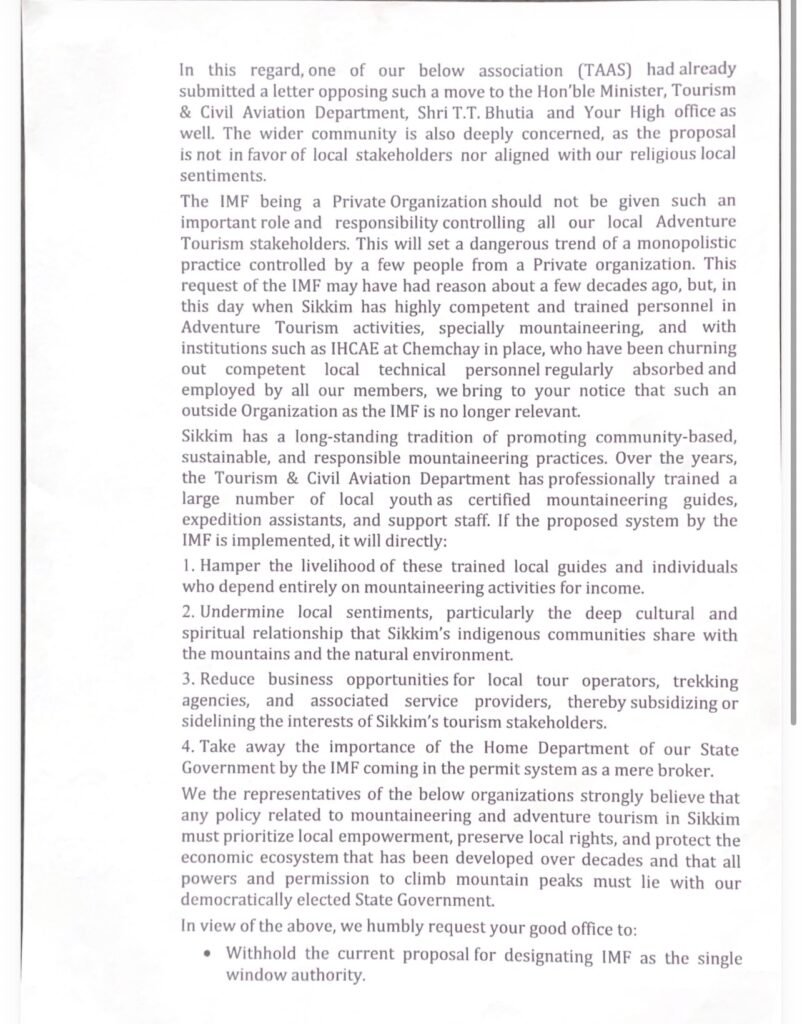
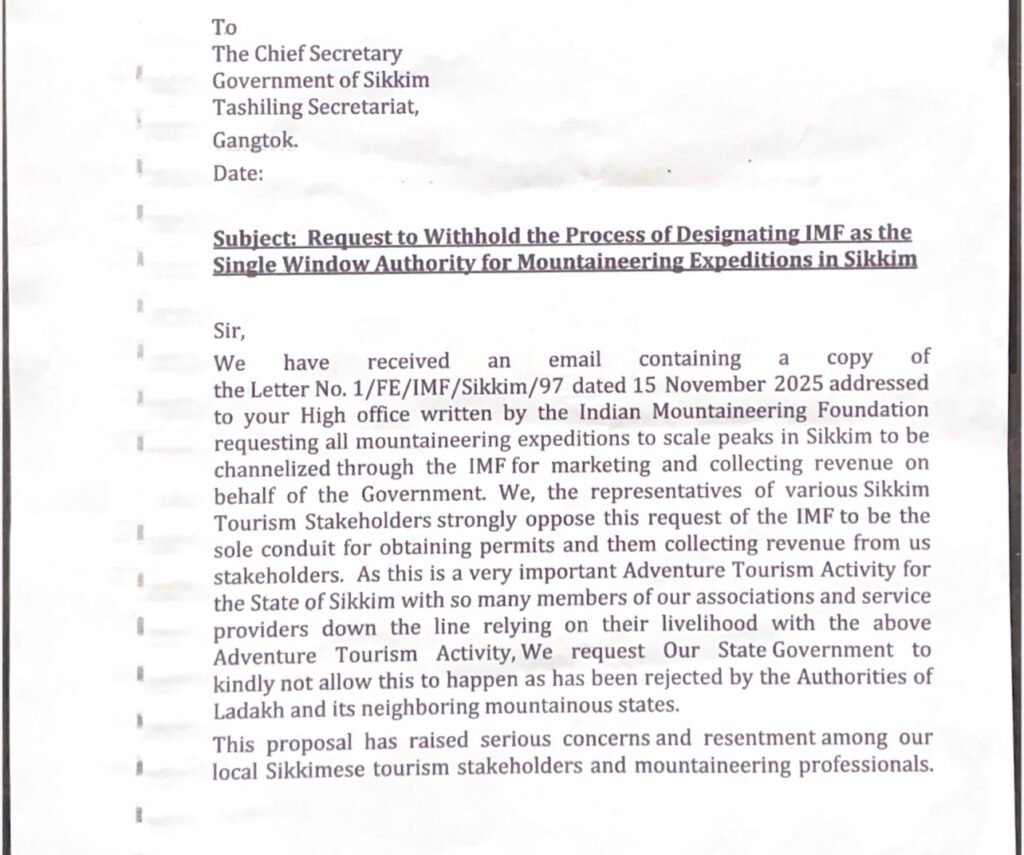
In a joint representation submitted to the Chief Secretary, Government of Sikkim, the stakeholders strongly opposed a letter issued by the IMF on November 15, 2025, proposing that all mountaineering expeditions in Sikkim be routed through the foundation for marketing and revenue collection on behalf of the government.
The associations cautioned that such a move would have serious implications for local livelihoods and could disrupt Sikkim’s long-established, community-driven adventure tourism ecosystem. They argued that allowing an external organisation to act as the sole authority for permits and revenue collection would create a monopolistic structure, marginalising local tour operators, trained guides, and mountaineering professionals.
“It also undermines the power of the State Government to grant permission to scale peaks as a tourism product,” some stakeholders told Sikkim Chronicle, expressing concern over the erosion of state authority in a sensitive and strategic sector.
The representation highlighted that Sikkim today has a strong base of highly trained local mountaineering personnel, supported by institutions such as the Himalayan Centre for Adventure and Eco-Tourism (HCAET), Chemchey. The signatories maintained that, given this institutional capacity and expertise, the relevance of the IMF as an external authority has diminished over time.
The associations further emphasised Sikkim’s unique cultural and spiritual relationship with its mountains, noting that any policy governing mountaineering activities must be sensitive to local traditions, beliefs, and sentiments, and should remain under the control of the local administration.
They warned that implementation of the IMF proposal could dilute local control, reduce business opportunities for homegrown operators, and weaken the role of state departments—particularly the Home Department—in the existing permit process.
According to the stakeholders, the proposed system could potentially:
- Hamper the livelihoods of trained local guides and support staff dependent on mountaineering activities,
- Undermine indigenous cultural and spiritual ties with the mountains,
- Curtail opportunities for local tour operators and allied service providers, and
- Shift authority away from the democratically elected State Government.
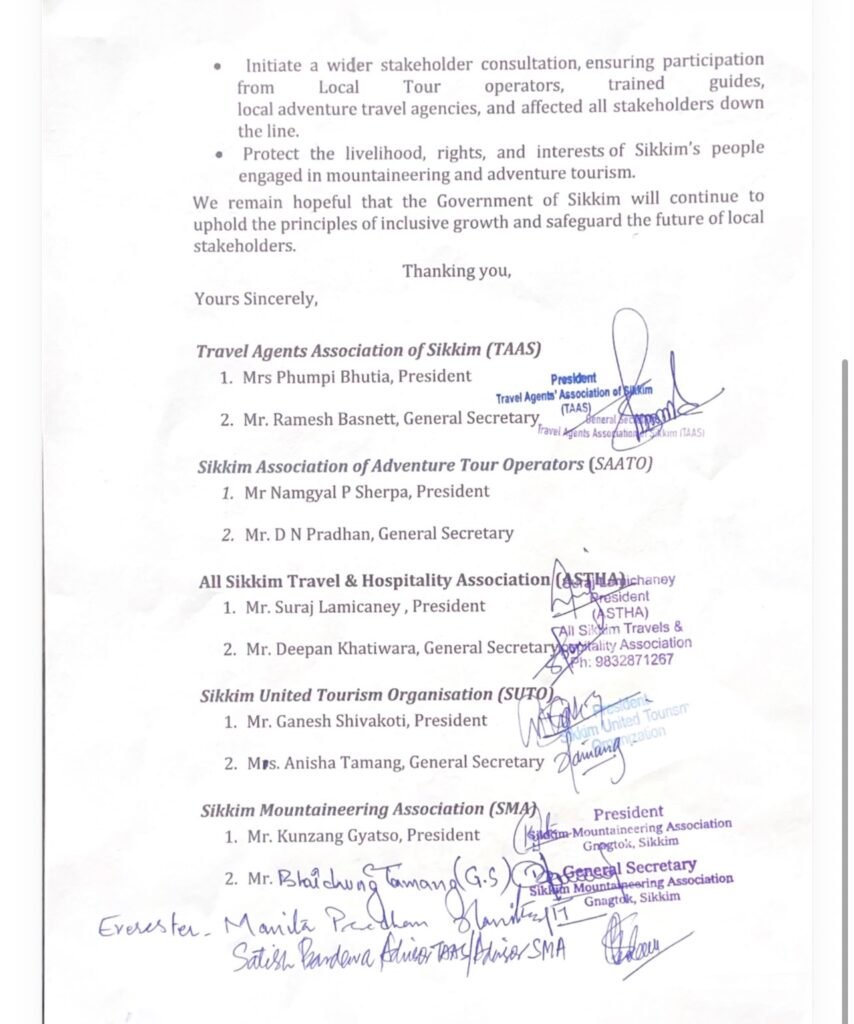
The joint representation called upon the State Government to immediately withhold the proposal, initiate broader stakeholder consultations involving local tour operators and adventure professionals, and safeguard the rights and interests of Sikkimese citizens engaged in mountaineering and adventure tourism.
The letter was jointly signed by representatives of the Travel Agents Association of Sikkim (TAAS), Sikkim Association of Adventure Tour Operators (SAATO), All Sikkim Travel & Hospitality Association (ASTHA), Sikkim United Tourism Organisation (SUTO), and the Sikkim Mountaineering Association (SMA).
The associations expressed hope that the Government of Sikkim would continue to uphold the principles of inclusive growth and protect the future of local tourism stakeholders while framing policies related to adventure and mountaineering tourism in the state.