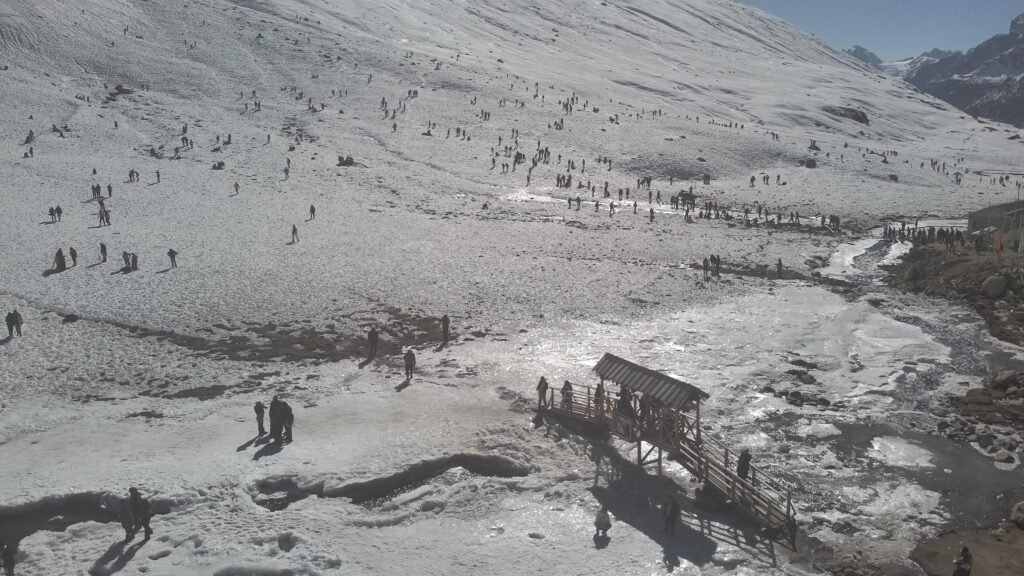

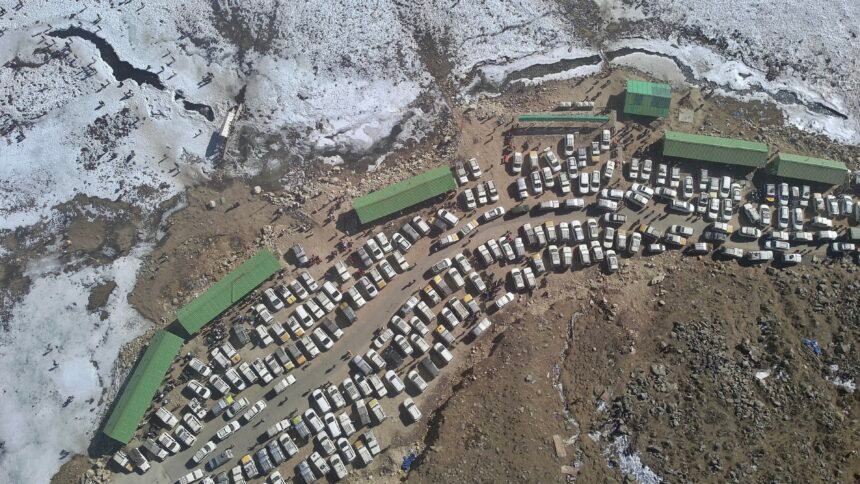
Popularly known as “Zero Point” among tourists and travellers, this pristine stretch of land on the banks of the Dongkya Chhu, near Zadong under the Lachung Dzumsa, is witnessing an unprecedented surge in tourist footfall. Nestled in the lap of the Great Himalayan Range, Zero Point is framed by majestic snow-covered slopes on both sides, with the crystal-clear Dongkya Chhu flowing gently through its centre, creating a scene of rare and untouched beauty.
Perched at an altitude of nearly 16,000 feet, Zero Point is often described by visitors as one of the most beautiful locations not only in Sikkim but also among the finest landscapes they have encountered anywhere in their travels. The combination of pristine white snowfields, rugged Himalayan terrain, crisp mountain air free from pollution, and the soothing calm of the flowing Chhu leaves an unforgettable impression on almost every visitor.
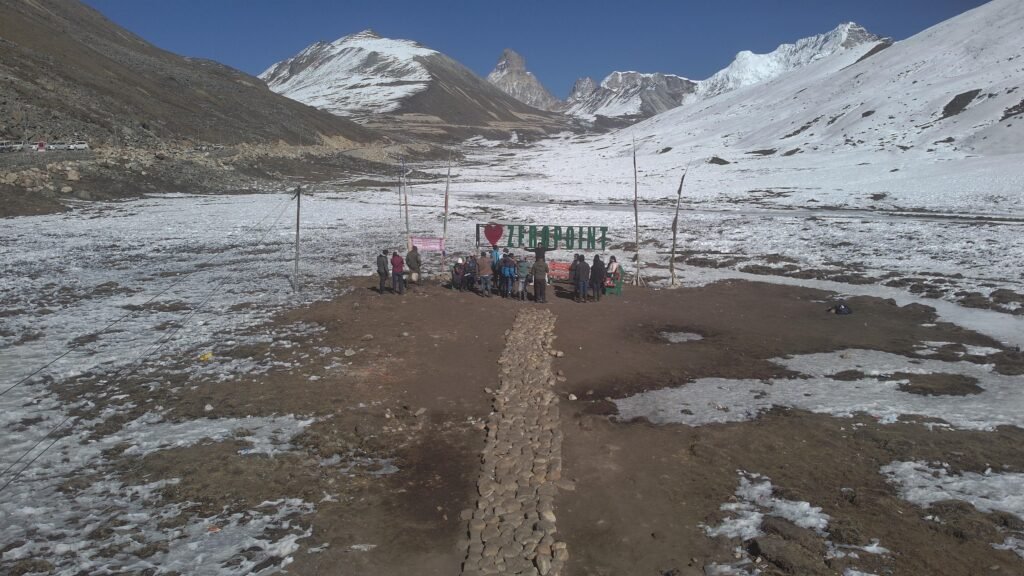
In recent years, Zero Point has seen a steady rise in the number of tourists, but the current season has marked a dramatic increase. Daily visitor numbers, which earlier ranged between 800 and 1,000, have now surged to an average of around 2,000 tourists per day, with nearly 4,000 visitors recorded on peak days. These figures are particularly remarkable considering the remoteness of the destination, its extreme altitude, and the fact that it is accessible only via a single-track road winding through challenging Himalayan terrain.
Beyond its natural allure, a key factor driving this tourism boom is the sustained and multifaceted support of the Indian Army, particularly through its Operation Sadbhavana initiatives. Under this programme, the Army has set up 28 shop rooms for local residents, creating vital livelihood opportunities for the community. These shops have added a vibrant and festive character to Zero Point, complementing popular attractions such as the now-iconic “I Love Zero Point” signage, which has emerged as a local landmark.
The Army has also installed park benches, tables, and modular toilet facilities, significantly improving visitor comfort and hygiene. This holistic development and beautification of the area have not only enhanced the visual appeal of Zero Point but have also ensured safer and more organised tourism, thereby strengthening the local economy.
The benefits of this surge extend well beyond the shop owners at Zero Point. Taxi operators, hotel owners, and homestay providers in Lachung have also experienced increased business. Additionally, the presence of Army posts at Shivmandir and Zadong, along with the continuous support of the Border Roads Organisation (BRO/GREF), has played a crucial role in sustaining tourism. Their efforts ensure that the road to Zero Point remains open even after repeated snowfall—something that was almost unheard of just a few years ago.
Equally important is the sense of security and reassurance provided to tourists. The Army’s presence ensures quick medical assistance during emergencies, as well as shelter and recovery support in cases of vehicle breakdowns or adverse weather. According to rough estimates shared by locals, nearly 7,500 civilians have received medical aid from the Army in the past month alone, underscoring the scale and impact of this support.
Today, Zero Point stands out as a must-visit destination for anyone travelling to Sikkim and ranks among the most popular tourist hotspots in the country this season. The destination is accessible by road via Chungthang – Lachung – Namnasa – Shivmandir, with local taxis operating regularly from Siliguri, Gangtok, and Mangan.
With its breathtaking natural beauty, improved infrastructure, and robust support systems, Zero Point continues to redefine high-altitude tourism in Sikkim, offering visitors an experience that is both awe-inspiring and memorable.