
Article by Nirmal Mangar
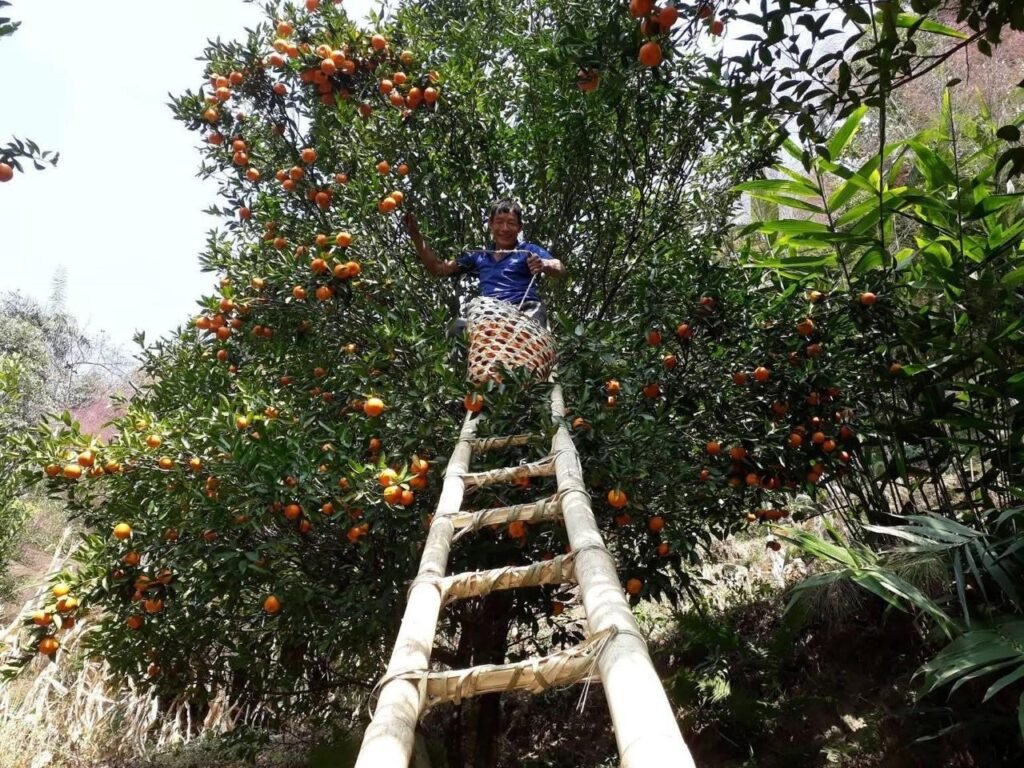
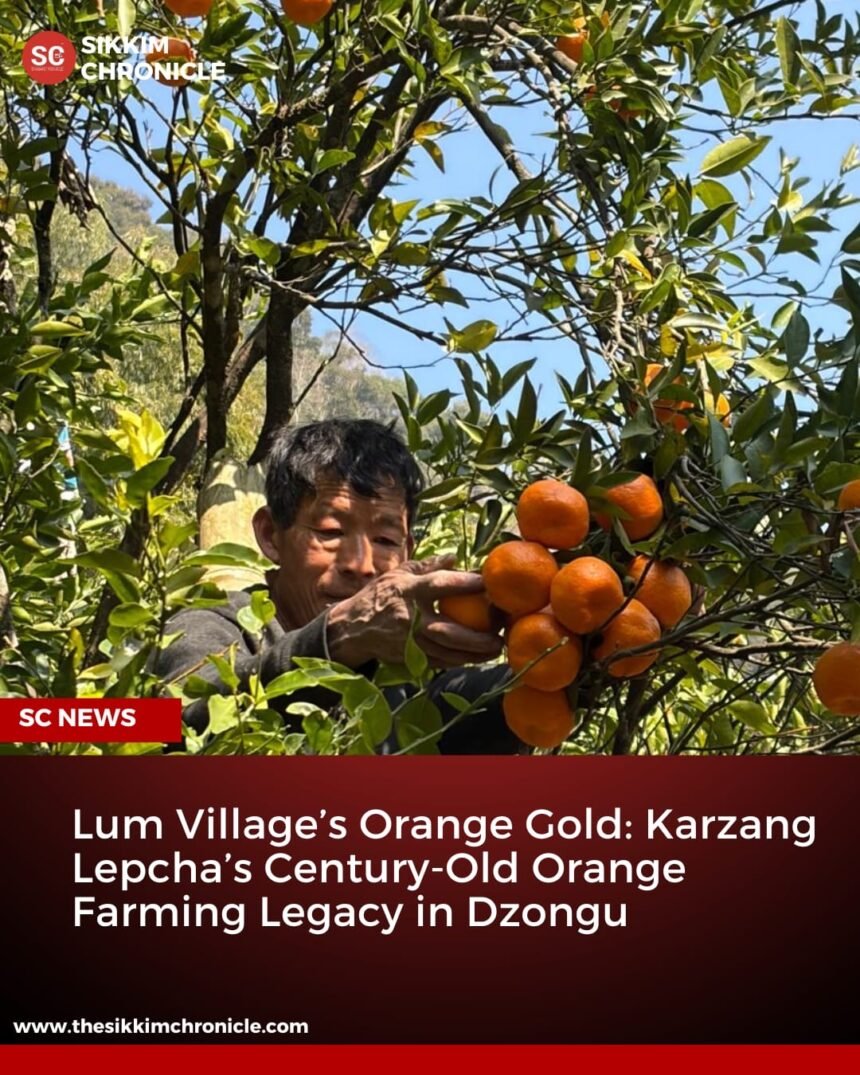
Lum, Dzongu (North Sikkim): At 57, Karzang Lepcha stands as a living example of how traditional knowledge, perseverance, and sustainable farming continue to shape rural livelihoods in North Sikkim. A resident of Lum village under the Dzongu Constituency, Karzang is an experienced farmer engaged in organic orange cultivation—a practice he says has been part of his life for as long as he can remember.
“I learnt orange farming from my ancestors. Cultivation is an integral part of my life,” says Karzang, whose family has been growing oranges for over a century.
Karzang currently manages around 5,000 orange trees, primarily of the Mandarin variety, spread across the hilly terrain of Lum. His orchards produce an estimated minumum 1 lakh forty pieces of oranges annually, generating a turnover of ₹10–12 lakh per year, making orange farming one of the most reliable sources of income for his household.
Lum village comprises 75 households, out of which nearly 40 families are actively involved in orange cultivation producing above 11lakh pieces of oranges. For the villagers, oranges are not just a seasonal crop but the backbone of the local economy.
According to Sonam Lepcha, Ward Panchayat of Lum village and son of Karzang Lepcha, orange farming remains the most important livelihood for the residents. “Oranges are the primary source of income for many families here. Despite challenges, villagers continue to depend on this crop,” he said
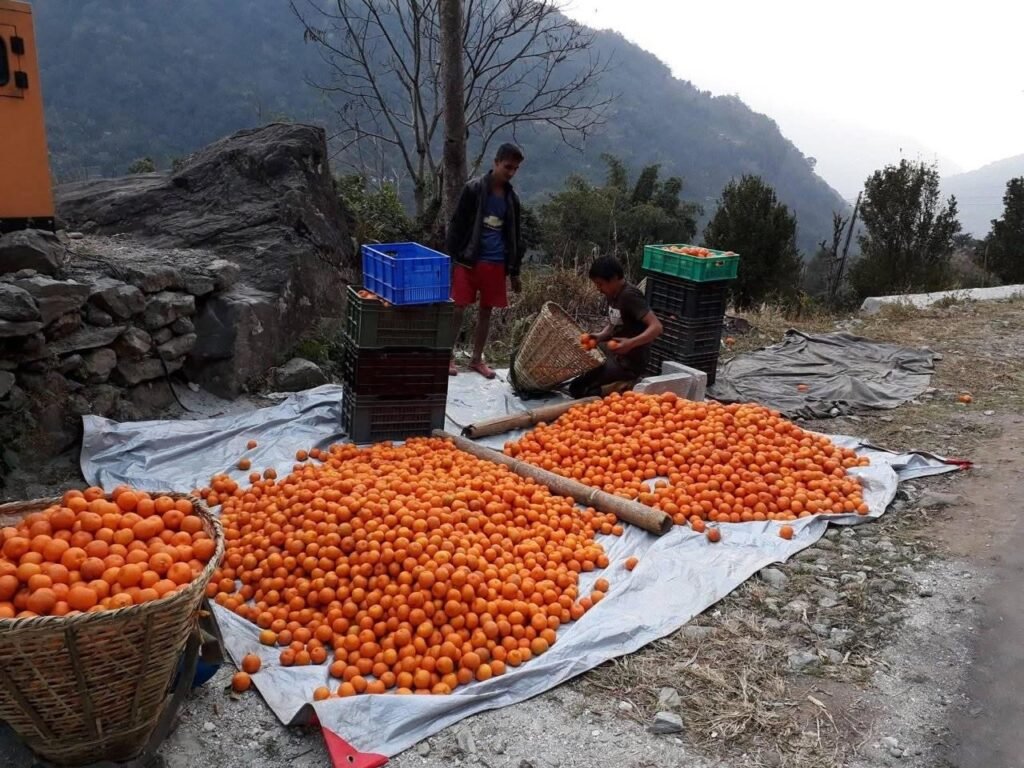
The orange harvesting season in Lum typically begins in November and continues till January. Since 2016, farmers have been marketing their produce through multiple channels, including SIMFED in Siliguri, private buyers, and local vendors.
On average, around 20 pickup vehicles are used each season to transport nearly 3 lakh Sixty thousand oranges from the village to SIMFED in Siliguri. Depending on size and quality, farmers earn anywhere between ₹5 to ₹18 per piece, with the largest oranges fetching the highest price.
Despite the success of orange farming, challenges persist. One of the major issues faced by farmers is the lack of motorable road connectivity. Oranges often have to be transported through head loads, significantly increasing labour and carrying costs.
Another concern is the stem borer infection, a disease affecting orange trees, which threatens productivity if not addressed through timely intervention.
While younger villagers are still involved in orange farming, Karzang notes that only a few are taking it up seriously as a long-term livelihood, raising concerns about the future continuity of this traditional occupation.
In recognition of his lifelong contribution to agriculture, Karzang Lepcha was recently conferred the “Best Farmer Award” of Lum village during the Sosa Kurtot Harvesting Festival. The honour celebrates not just his individual achievement but also the enduring agricultural heritage of Dzongu.
As Lum village continues to nurture its orange orchards against odds, farmers like Karzang Lepcha remain the custodians of a tradition that blends sustainability, culture, and economic resilience—proving that in the hills of North Sikkim, oranges are more than fruit; they are a way of life.