

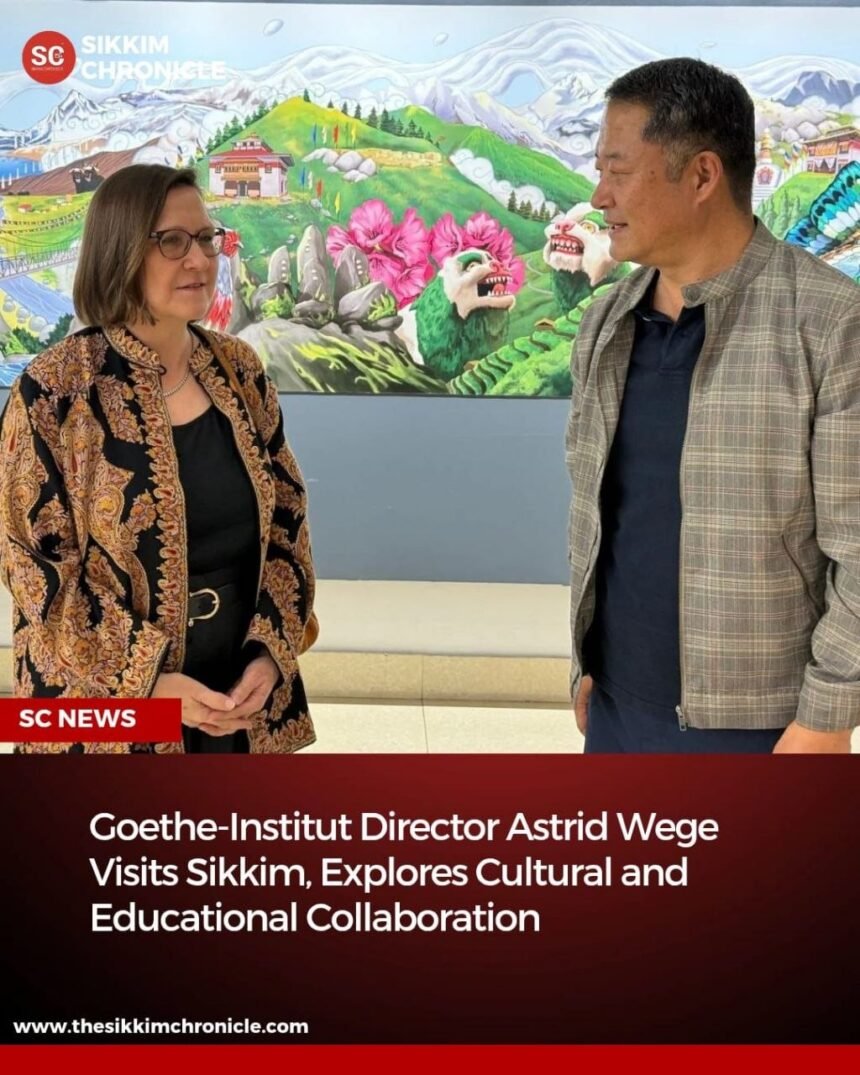
“Through initiatives like ‘My Way to Germany,’ we also guide individuals interested in studying or working in Germany,” said Astrid Wege, Director of the Goethe-Institut, during her visit to Sikkim.
Speaking to Sikkim Chronicle, Wege highlighted that the Goethe-Institut Kolkata is part of a global network active in 99 countries with around 150 institutes, including six in India. She noted that the Kolkata centre oversees East and Northeast India, which is why the institute is actively engaging with Sikkim.
She also spoke about the ongoing BioDesign Lab, a regional initiative focused on developing sustainable design solutions using locally available materials. The project has brought together experts from Germany along with artists, designers, and architects from Northeast India and across the country to encourage collaboration and innovation.
Wege stated that the institute operates in three major areas—German language education, cultural exchange, and access to contemporary Germany. She informed that German language courses from A1 to C2 levels are offered with internationally recognized certification, enabling learners to continue their studies seamlessly across Goethe-Institut centres worldwide.
Highlighting cultural exchange, she emphasized collaboration between artists from Germany and India through workshops, residencies, and co-productions, adding that the institute has been increasingly engaging with artists from the Northeast.
Earlier today, Wege visited the Department of Culture and Heritage Affairs Sikkim, where she interacted with officials and explored possibilities for future collaboration. Also present during the visit were Chief Engineer Rimp Dorjee, Additional Chief Engineer Sangay Diki Bhutia, Senior Information Technology Officer Ajay Pradhan, and Administrator Bikash Pradhan.
During the visit, she toured various facilities of the department, including the library, recording room, and auditorium.
Describing the meeting as positive and encouraging, Wege said there is strong mutual interest in collaboration. She noted that areas such as film, music, and literature hold significant potential, including opportunities to bring German filmmakers and music bands—especially in jazz—and create platforms for interaction with local artists through workshops and joint initiatives.
Wege added that the focus would be on building long-term partnerships through meaningful cultural exchange, with initiatives like the BioDesign Lab marking the beginning of deeper engagement in the region.
